With safety always in mind, we have
developed products based beyond industry standards, following our
specific Light Bicycle criteria. Before a new product launches, we test
for quality, specifically strength and durability. After launch,
samples from every production batch are tested to ensure performance
consistency, and are part of our quality control inspection checklist.
Standard Testing
The standard or non-destructive testing aims to discover
the structural performance of our products without harming their integrity.
Rim Trueness Test
The rim trueness
test is our most basic
check, and refers to the roundness and flatness of the carbon
rim. The lateral and radial movement tolerance for Light Bicycle
rims is 0.4mm.
Lateral Stiffness Test
Lateral stiffness testing
determines how much a rim
resists deformation sideways under a given load. Typically the wider the
rim and stiffer it is. Our universal testing machine pushes the rims to
measure the deflection.
Vertical Stiffness Test
The vertical stiffness test
shows how much a rim
will compress under load. Weight is slowly applied and we take
measurements of the deflection to one hundredth of an inch. Typically,
as the rim depth increases the vertical stiffness increases.
Braking Performance Test
Our braking performance
test involves stopping
distance, peak brake force, and heat dissipation efficiency. Results
provide customers with a better idea of the actual braking effects in
varied conditions.
Wheel Dynamic Balance Test
Unbalanced wheels and rims
are prone to wobble at
high speed, which undermines the controllability of the bike and
wheels.We test the overall dynamic speed balance of our wheels for
smoother rolling efficiency and solid road/tire contact.
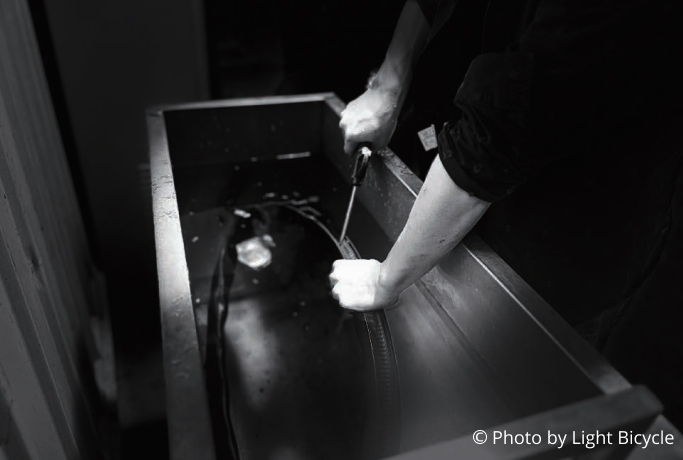
Rim Air Leak Test
The rim air leak test is conducted to ensure the
airtightness of the rim. This is a critical aspect for tubeless-ready rims, as any air leakage can
compromise the tire's performance and lead to pressure loss during rides.
Destructive Testing
Destructive tests allow us to further push and
explore the limits of Light Bicycle rims in extreme conditions. It accelerates the
development process and helps reduce the risk of damage to our final products.
Spoke Hole Ultimate Strength Test
This test
determines that the key area
around the holes has been precisely reinforced during the layup
process. Holes must endure a force of at least 300kg/f without
cracking. The high tension side of a finished wheel is typically
built to 120 to 130kg/f as reference.
Impact Resistance Test
The impact
resistance test shows the overall
structural performance of the wheels, and is performed without
tires mounted. The single wheel is fixed on a testing machine
base, and a striker (24kg) is dropped from a specific height
above. The higher the striker is raised, the greater the impact
force.
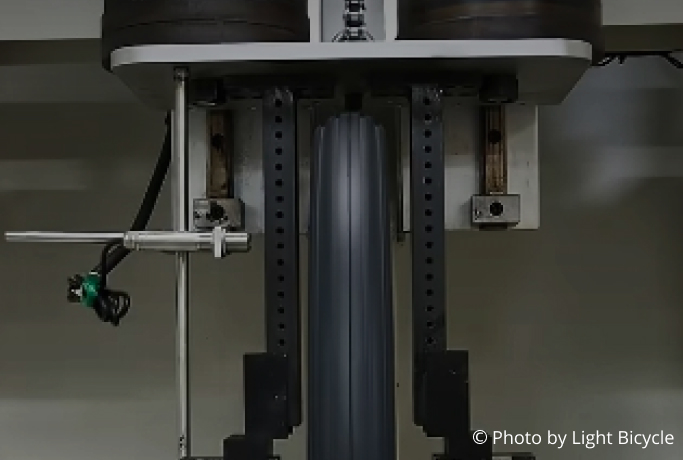
Wheel Fatigue Test
Our wheel fatigue test is to evaluate the overall
durability of a complete wheel system under cycling-like conditions, showing how the wheel performs as a
whole.
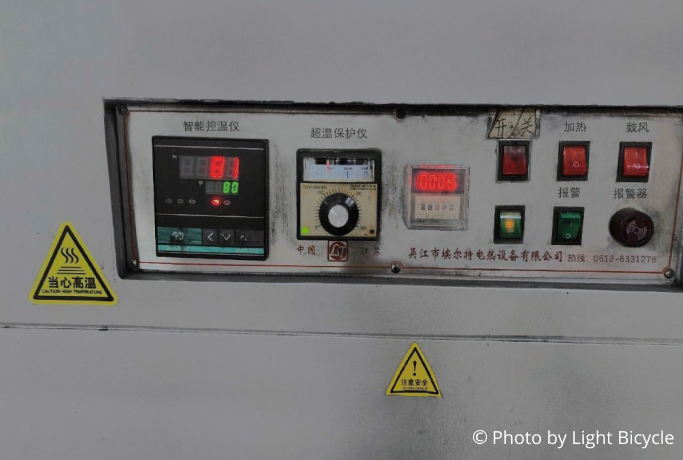
Greenhouse Test
Our greenhouse test evaluates the thermal durability
and structural stability of rims under high-temperature conditions. By simulating extreme heat exposure,
this test ensures that rims maintain their integrity and performance even in challenging environments,
such as prolonged sun exposure or high-friction braking scenarios.
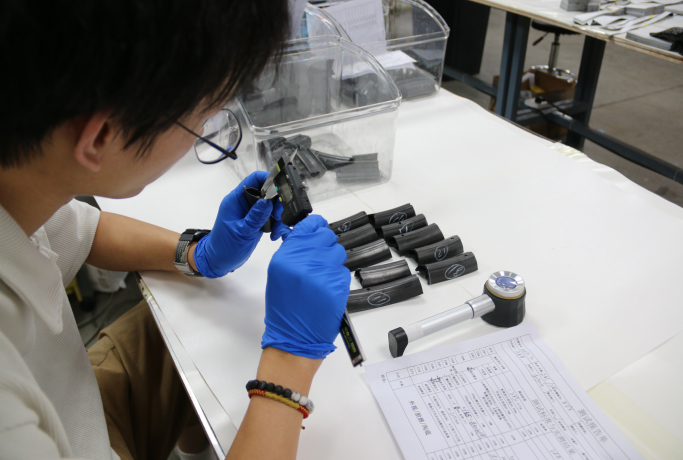
Rim Cutting Pieces Test
The rim cutting pieces test involves analyzing
cross-sections of the rim by cutting a portion to evaluate internal and external features. This inspection
focuses on identifying any burrs, irregularities, or deviations in dimensional specifications to ensure
the rim meets our stringent quality standards.
Fitting Test
We want to understand the overall compatibility of
our products with hubs, spokes, nipples, and tires before sending them to ambassadors
for long-term tests.
Wheel Building Test
Rim details are
amplified during the wheel
building process. A rim may look perfect, but if the hole
drilling angle is off or if the nipple bed layup isn’t
consistent, the wheel will build poorly. Strict Quality Control
must be in
place along with the manufacturing processes so when it comes
time to build, the wheel is predictable and within tight
tolerances.
Tire Installation Test
We inspect tire/rim
compatibility, the ease
of mounting and dismounting the tire, actual tire widths, and
brake track deformation due to inflation pressure.
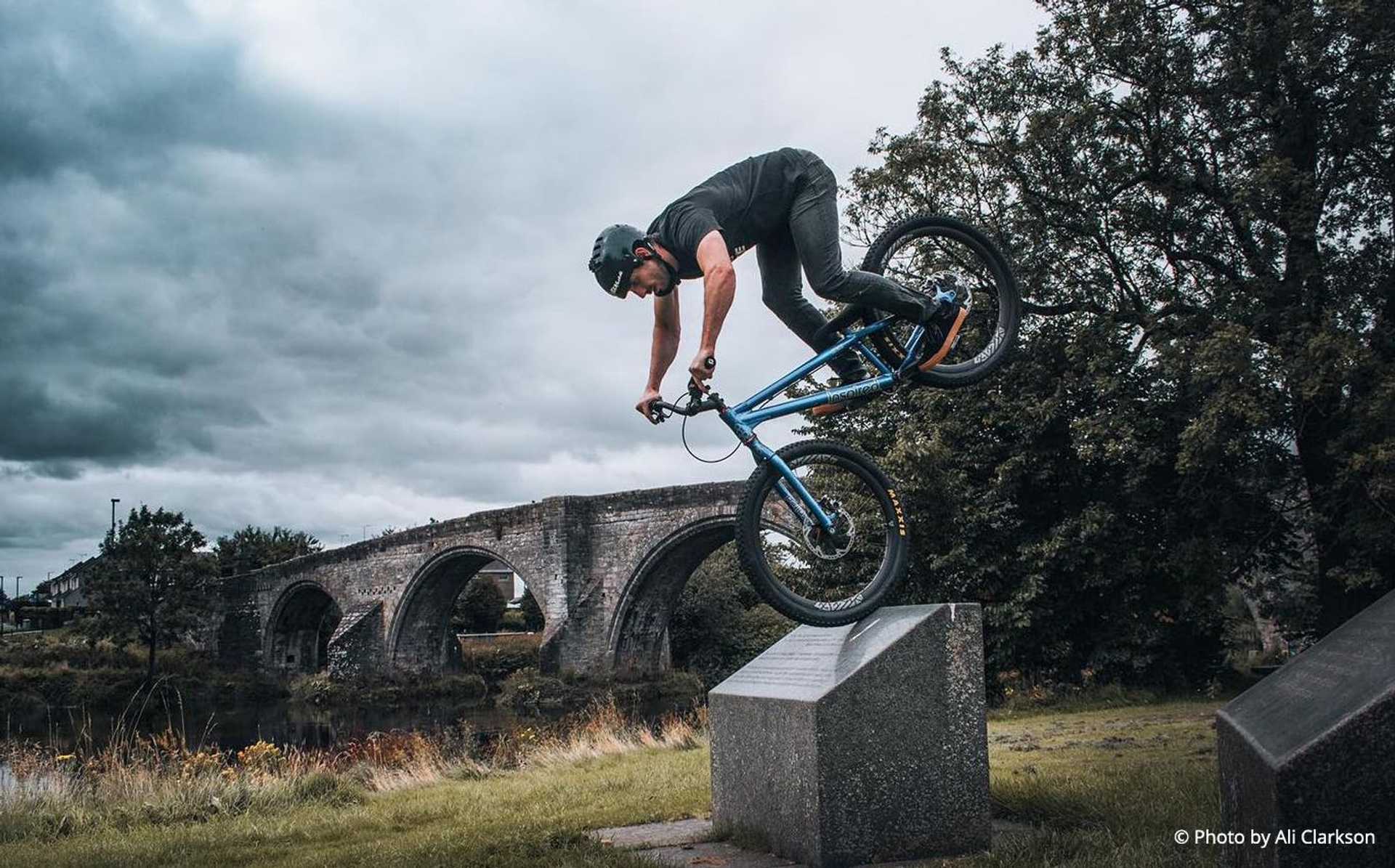
Field Testing
Testing is not complete without skilled riders putting
them through their paces. We send our newly developed rims that have passed all the
aforementioned tests to riders and ambassadors across the globe. Ali Clarkson, a
professional trials rider
knows a thing or two about the difference a high quality wheel makes.
Disclaimer
We pick only one sample for every test report and the results will likely vary as the rim diameters
change. Please note that the differences between models in test results are specially
designed by our engineers
for the intended uses.
All the test results of this section are based on the lab
criteria of Light Bicycle and are implemented at our well-established testing
facilities. Light Bicycle is only responsible for the test results themselves which are
not set for any comparison
to other brands or such regards.
SHARE NOW:
October 24th, 2020 | Light Bicycle
Get in touch
Feel free to leave a comment if you have any questions or suggestions on our products or other issues.
Please leave your name here.
E-mail is required for further contact.
Please enter a message.
We use cookies for a better experience. Learn more.
Customize
Accept
Your Cookie Preferences
We use cookies to improve your experience on this website. You may choose which types of cookies to allow and change your preferences at any time. Disabling cookies may impact your experience on this website. You can learn more by viewing our Cookie Policy.
Cookies required to enable basic website functionality.
Cookies used to understand how the website is being used.
Cookies that are used to enhance the functionality of the website.
Cookies used to deliver advertising that is more relevant to your interests.